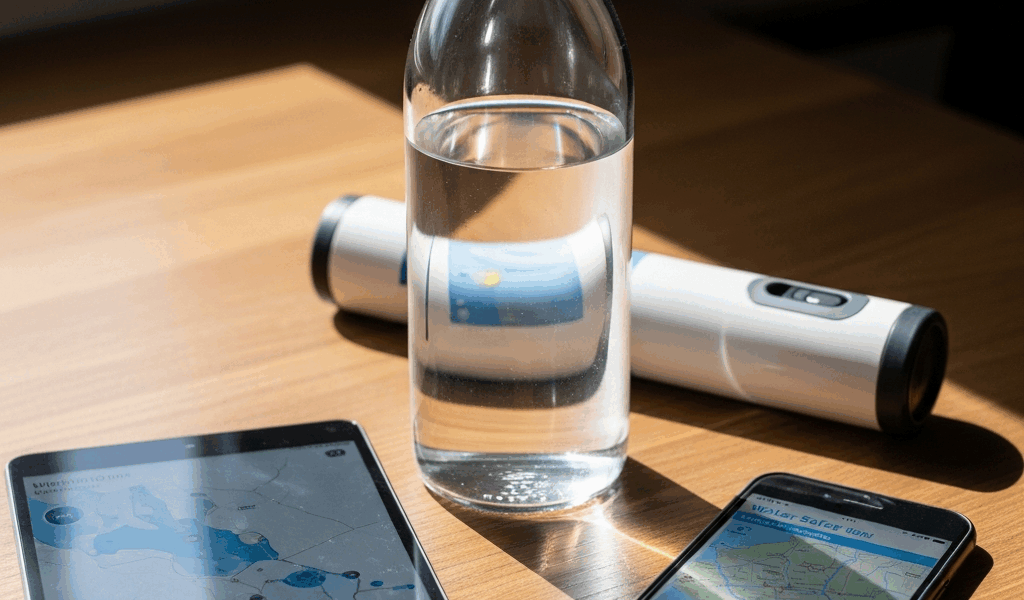
How Bad Is the Risk, Really
Traveling with bad water has gotten complicated with all the conflicting advice flying around. As someone who spent three miserable weeks in Thailand nursing a stomach bug I picked up from ice cubes at a beachfront bar, I learned everything there is to know about this subject the hard way. Today, I will share it all with you.
The culprit, by the way, wasn’t some sketchy roadside stall. It was a place I trusted immediately upon arrival — polished tables, English menus, the works. Before that trip, I assumed tap water safety was binary. Either safe or dangerous. The reality is messier and far more regional than that.
Here’s what actually matters: not all unsafe water will put you in a hospital bed. Some destinations have tap water that’s technically drinkable but tastes like rust and pool chemicals. Others look and smell fine but carry parasites that won’t announce themselves for weeks. And some places genuinely pump contaminated water into homes every single day — no warnings, no asterisks.
That’s what makes water risk so endearing to us travelers — the false sense of security we build until reality corrects it. Most people benefit from knowing which tier their destination falls into rather than obsessing over every single sip.
High-Risk Destinations
South and Southeast Asia, Sub-Saharan Africa, and Central America see the highest concentration of waterborne illness among tourists. Not fearmongering — the CDC’s Traveler’s Health database confirms it. Bangladesh, Nigeria, Peru, and Cambodia show up repeatedly in traveler diarrhea statistics. Heading to those regions? Assume the tap water isn’t safe and plan before you board.
Medium-Risk Destinations
Eastern Europe, chunks of South America, and the Middle East sit in the gray zone. Argentina’s tap water is generally fine. Peru’s is not. Urban areas lean toward safer. Rural villages often don’t have that luxury. Your hotel probably filters its water. The ice at the street stall almost certainly doesn’t. That distinction matters enormously.
Generally Safe Destinations
Western Europe, Japan, Australia, and most of North America have solid municipal water systems. Drink from the tap. That said, your stomach might still revolt — not from contamination, but because the mineral content is different from what your gut expects at home. Annoying. Harmless, but annoying.
What to Do Before You Even Leave
Thirty minutes of preparation prevents weeks of misery. That’s the deal.
Research Your Specific Destination
The CDC Traveler’s Health website and WHO water quality databases let you search by country and city. You’ll get honest assessments — not tourism board propaganda. Download the relevant pages as PDFs before you fly. You won’t have reliable internet the moment you land, and that’s precisely when you’ll need the information.
Buy a Portable Water Filter
While you won’t need a full backcountry water treatment setup, you will need a handful of compact tools. The Sawyer Squeeze — around $30 at most outdoor retailers — removes 99.99% of bacteria and protozoa. Lightweight, works with any standard bottle, rated for 100,000 gallons. The LifeStraw Go at $35 is nearly identical in performance. Both are faster than boiling and more reliable than tablets alone.
I’ve carried a Sawyer Squeeze on four international trips. It’s paid for itself several times over. I’ve filled it from hotel taps, public fountains, even a questionable stream in northern Vietnam — and drank without a second thought. Don’t make my pre-Sawyer mistake.
Pack Purification Tablets
Aquamia or Potable Aqua tablets — roughly $8 for a bottle — are your insurance policy. They’re tiny. They weigh essentially nothing. The taste is slightly off, but they work everywhere on earth. Keep them in your toiletries bag even if you’re also carrying a filter. I lost my Sawyer in a hostel in Budapest once and spent the remaining five days using tablets. Not ideal. Functional. I was grateful they were there.
Download an Offline Reference
Screenshot the CDC page for your destination. Save it to your phone. Or print it on actual paper if you’re old-fashioned about it. Either way — do this before you travel, not at the airport.
The Hidden Sources Most Travelers Miss
Probably should have opened with this section, honestly. This is where most tourists actually get sick — not from drinking tap water directly, but from these sneakier routes.
Ice Cubes
Ice is frozen tap water. If the tap water isn’t safe, neither is the ice. You know this logically. You will absolutely forget it at 11 PM in a Hanoi bar when someone hands you a cold beer over a glass full of crushed ice. That’s when it starts. Request drinks without ice — it feels awkward exactly once, then it becomes automatic.
Brushing Your Teeth
Use bottled water. Even for rinsing. Even if you’re only in the country for four days. Your mouth is more porous than your stomach — dental exposure accumulates differently than drinking a full glass. I learned this by skipping the precaution and spending day six of a trip feeling genuinely awful. Not worth it.
Restaurant Salads and Fruit
Lettuce gets rinsed in tap water. Watermelon gets sliced with knives that touched contaminated surfaces. Fruit served with the rind intact is your safer bet — you can peel it yourself. If you speak enough of the local language, ask how produce is washed. If you don’t, stick to cooked food for the first few days until your stomach finds its footing.
Hotel Room Taps Versus Filtered Dispensers
Many hotels in medium-risk areas have filtered water dispensers in the lobby — but completely unfiltered taps in the rooms. Ask at check-in. Fill your bottles from the dispenser, not the bathroom sink. This single distinction matters more than most travelers ever realize.
Refilling From Unknown Sources
That charming village well or street vendor’s clay pitcher? Skip it. A bottle of water costs between $0.50 and $2 depending on where you are. That’s what certainty costs. It’s worth it every time.
How to Purify Water When You Have No Other Option
Scenarios happen. Your filter breaks mid-hike. You’re three hours from the nearest town and bottled water doesn’t exist within walking distance. You need water now.
Boiling
One minute at 100°C — 212°F at sea level — kills everything biological. It’s the most reliable method available anywhere on earth. The downsides are real though: you need a heat source, a vessel, time, and fuel. It won’t touch chemical contaminants. Best used when you’re stationary — camping in one place, holed up somewhere for several days.
Chemical Tablets
Iodine tablets work in about 30 minutes. Chlorine dioxide tablets — Potable Aqua brand being the most common — take closer to four hours but taste noticeably better. The tradeoff is the flavor: iodine tastes like iodine, which is unpleasant but harmless. Counteract it by adding a packet of powdered drink mix — Tang, lemonade, whatever you have. I’ve done this more times than I can count. It works.
UV Purifiers
The SteriPen Ultra runs $40 to $80 depending on the model. It uses ultraviolet light to disable microorganisms — results in about 90 seconds per liter. One catch: it won’t work on murky water, only clarified. Battery life runs around 3,000 treatments per charge. Good for day trips and urban travel. Not ideal for a ten-day backcountry expedition.
Squeeze Filters
The Sawyer Squeeze might be the best all-around option, as travel water purification requires both speed and reliability. That is because mechanical filtration works instantly without chemicals, taste changes, or waiting periods. One limitation — it doesn’t remove viruses, which matters specifically in Sub-Saharan Africa and South Asia. Pair it with a chlorine dioxide tablet for complete coverage. This is the method I recommend for most people in most situations.
What To Do If You Already Drank Sketchy Water
The anxiety that follows a questionable sip is often worse than the illness itself. Here’s the honest timeline: symptoms appear within 24 to 48 hours if they’re going to appear at all. Sometimes nothing happens. Sometimes you’re very unlucky.
Watch For These Signals
Cramping, nausea, loose stools, or fever all warrant attention. Mild diarrhea is common even among careful travelers — it often resolves completely without intervention. Give it 24 hours before escalating your concern.
Rehydrate Aggressively
Pack oral rehydration solution packets — ORS — before you leave home. DripDrop is a widely available brand. WHO-formulated packets work identically. Regular water and sports drinks don’t rehydrate efficiently when you’re genuinely ill. Mix one packet with bottled water and drink regularly throughout the day, not all at once in a panic.
Medication Guidance
Loperamide — generic Imodium — stops symptoms but effectively traps pathogens inside your system. Save it for moments when you absolutely must travel or function. Bismuth subsalicylate, which is just Pepto-Bismol, reduces cramping and fluid loss without that trapping effect. Both are available over-the-counter in most countries internationally.
When to See a Doctor
Fever above 39°C — that’s 102°F — bloody stools, signs of real dehydration like extreme thirst and dark urine, or symptoms stretching past five days all warrant actual medical attention. Travel insurance with medical evacuation coverage is worth every dollar if you’re heading somewhere genuinely remote. Buy it. Use it if you need it.
Safe drinking water abroad is absolutely achievable with a bit of preparation. First, you should research your destination’s specific risk tier — at least if you want to avoid guessing in the moment. A $30 filter, a backup bottle of tablets, and honest expectations about regional risk will cover the vast majority of situations you’ll actually encounter. Start there, before you pack anything else.

Leave a Reply