Why Cruise Ships Are Germ Hotspots
Staying healthy on a cruise ship has gotten complicated with all the conflicting advice flying around. As someone who has sailed on fourteen cruises across three continents and gotten sick on exactly two of them, I learned everything there is to know about what actually causes illness at sea — and what doesn’t. Today, I will share it all with you.
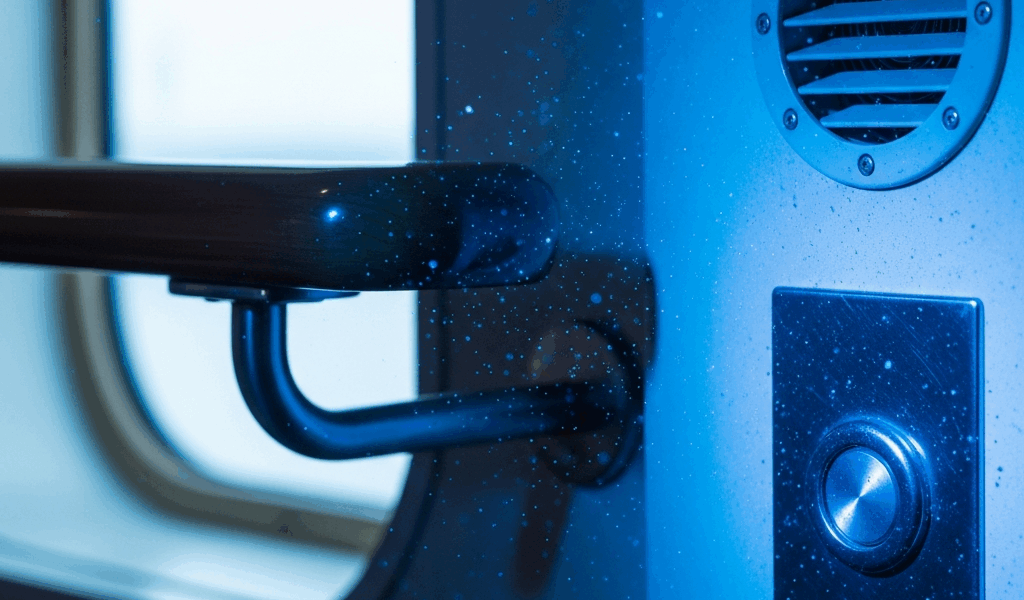
But what is a cruise ship, really, from a public health standpoint? In essence, it’s a floating apartment complex where 3,000 to 6,000 strangers share air, food, and elevator buttons for a week straight. But it’s much more than that — it’s a controlled environment where one person’s bad luck becomes everyone’s problem fast. I timed elevator button contacts once during a Royal Caribbean sailing. Roughly 47 hand-touches per minute on the main bank. Don’t ask why I did that. I just did.
The ventilation systems are modern. Efficient, even. But they’re built for air circulation, not disease isolation. Norovirus — the stomach illness cruise lines dread and refuse to name out loud — doesn’t care which deck you’re on. Buffet service makes everything worse. Hundreds of people touching the same tongs, the same ladle handles, the same sneeze guard edges. One infected crew member near the salad station and suddenly the whole ship has a problem. That’s not fearmongering. That’s just how buffets work.
None of this should scare you off cruising. It should make you prepared. Norovirus isn’t deadly, but it moves fast and it’s thoroughly miserable. The good news? Almost entirely preventable — if you know what you’re doing.
What to Do Before You Even Board
Probably should have opened with this section, honestly. Pre-trip preparation does more work than anything you’ll do onboard.
First, you should check the CDC’s Vessel Sanitation Program database — at least if you want actual data instead of guessing. Every ship inspection result lives there, searchable by vessel name. Before my 2019 sailing on the Harmony of the Seas, I pulled the report and found a 95 out of 100 score. They’d been dinged for a minor cooler temperature variance in the galley. Nothing systemic. That kind of detail matters.
While you won’t need a full pharmacy, you will need a handful of specific items packed before you leave home:
- A 2 oz alcohol-based hand sanitizer — TSA-approved, refillable once you’re aboard
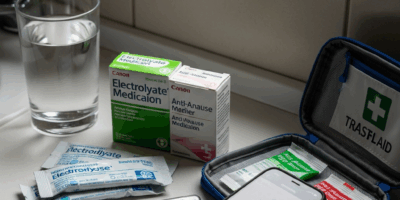
- Electrolyte packets — Liquid IV or DripDrop, about $1 each, because when stomach trouble hits, these do real work
- Motion sickness medication — Dramamine works for most people; prescription Scopolamine patches if you run prone to it
- Imodium, not Pepto-Bismol — Imodium works faster and the pink stuff can mask dehydration symptoms
- A digital thermometer — the cheap ones from Walgreens that read in 10 seconds are fine
Get any travel vaccines at least two weeks before departure. Typhoid and Hepatitis A matter most if your ports include Central America or Southeast Asia. Your doctor handles the specifics based on itinerary, but that conversation is worth having.
Travel insurance. I’m apparently the kind of person who skips it once and never skips it again — and that $80 Allianz policy works for me now while self-insuring never does. A ship’s medical center runs $250 to $400 for a basic visit. Emergency evacuation hits five figures fast. Don’t make my mistake.
The Onboard Habits That Actually Make a Difference
The buffet might be the best option for convenience, as cruise dining requires flexibility. That is because dining room seating fills fast during peak hours and the buffet runs longer. But the buffet is also where most onboard transmission happens — so you need both things to be true in your head at once.
Use serving utensils for everything. Watch which utensil is being used before you grab the same one. Some people use their hands at the buffet. Those people exist on every ship. Going at 4:45 PM or 8:15 PM instead of the 5:30-to-7:00 PM rush cuts your exposure significantly. The food is identical. The crowd density is not.
Raw foods deserve skepticism, especially on sea days. Cooking kills viruses. A hot roasted vegetable and a grilled protein are lower-risk than ceviche that’s been sitting in a cold bath for three hours. Save the raw bar for port restaurants — faster inventory turnover there, fresher product.
Handwashing is a ritual, not an occasional thing. Every dining room entrance on every ship I’ve sailed has sanitizer stations. Use them. Wash with actual soap and water before boarding, immediately after boarding, and after any high-traffic area — the atrium, the casino, the elevator bank. Your hands are the delivery system. Your face is the entry point. Interrupt that chain and you’ve solved most of the problem.
Pool and hot tub risk is real but overstated. People are gross in pools — that’s just documented fact. Hot tubs run warmer, which degrades chlorine faster. I swim in both because the actual illness risk is low. I shower immediately after. I don’t submerge my face. Open cuts get you out of the pool entirely.
The lido deck on sea days is where transmission spreads fastest — not the dining room. Crowded chairs, shared towels, people touching the buffet tongs right after gripping a railing. Bring your own 2 oz sanitizer to the pool area. Most people don’t bother. That’s why most people are the ones getting sick.
Elevator buttons and door handles get touched constantly. Use a tissue or your knuckle — whichever feels less paranoid to you. Your cabin door handle has been touched by housekeeping, previous guests, and everyone who’s ever brushed past it in the hallway.
Fresh air in your cabin helps. Open the balcony door when you’re in port. The recycled air system is functional, but outside air is still outside air. And despite what your anxiety might tell you, you won’t contract a neighbor’s illness through the ventilation — the ship’s system has enough isolation built in for that. The risk there is smaller than it feels.
What to Do If You Start Feeling Sick Onboard
Symptoms move fast. Nausea first. Then cramping. Then — let’s say — urgent digestive developments. The moment you feel off, you go to the medical center. Not tomorrow. Not when it gets worse. Now. The staff has seen this hundreds of times. They’re not judging you; they’re doing epidemiology.
Frustrated by a $300 medical bill on what was supposed to be a vacation, most people wait too long to report symptoms — and that’s exactly how outbreaks spread past one cabin. Go early. The visit runs $250 to $400 for evaluation and basic treatment. They’ll confirm norovirus based on your symptom timeline, give you anti-nausea medication and electrolyte solution, and isolate you to your cabin for 24 to 48 hours after symptoms resolve.
Room service comes to your door. The ship covers it during medical isolation. You eat on the balcony or in bed. You mix DripDrop packets into bottled water from your cabin minibar. You rest. It’s miserable — genuinely miserable — but most people recover in 24 to 36 hours. That’s temporary.
This is where the $80 travel insurance earns back its cost. Early disembarkation for medical reasons, unused cruise days, evacuation costs — all covered, depending on your specific policy. Read the policy before you buy it. That was a lesson from 2017 I’d rather not repeat.
Port Days Are Where Most People Actually Get Sick
This is the overlooked angle — and it’s where the people who did everything right still end up sick.
You spent a whole week at sea avoiding the buffet rush, washing your hands at every dining room entrance, being careful. Then you hit Cozumel and order a margarita with ice made from local tap water. That’s where it comes from. Not the ship. The port.
Ice in drinks is the primary culprit in warm destinations. Caribbean ports, Mexico, Southeast Asia — skip the ice or order bottled water directly. In Europe, water is generally safe. In Southeast Asia, assume ice is risky unless the establishment is clearly upscale. Street food is usually fine and often excellent — but if it’s not cooking fresh in front of you, it sat somewhere warm for a while. That matters.
Sunstroke compounds everything. Six hours in 90-degree Cozumel heat dehydrates you faster than you’ll notice. Dehydration weakens your response to anything — heat illness, existing viruses, general misery. Two liters of water minimum on port days. More if you’re walking ruins or hiking. Electrolyte packets in half of that water helps your body actually retain it.
Tour guides handle shared objects constantly — railings, artifacts, equipment. Bring your 2 oz hand sanitizer on every excursion. Use it after touching shared surfaces at historical sites. Sounds excessive written out like that. It isn’t.
The last port day of your cruise carries the highest norovirus risk — the virus has had a full week to circulate through the ship’s population, and you’re more likely to encounter someone actively shedding it. Stay sharp on that final day specifically.
Staying healthy on a cruise is a whole-trip project — before you sail, while you’re aboard, and when you step off onto a port dock. It takes awareness, not paranoia. Most cruisers never get sick. The ones who do almost always skipped one of these steps at exactly the wrong moment. Now you know which steps those are. So, without further ado, go book the cruise — and pack the Imodium.

Leave a Reply