First 2 Hours — What To Do Immediately
Food poisoning while traveling has gotten complicated with all the conflicting advice flying around. You’re in a Bangkok hotel bathroom at 3 a.m. Maybe it’s a hostel in Lima. Maybe a rental apartment in Lisbon. Doesn’t matter. You need answers right now — not tomorrow morning when you’ve already lost another four hours to this.
So, without further ado, let’s dive in.
Stop eating. Everything. Your stomach is staging a full revolt, and throwing more food at the problem just drags out the misery. That part’s simple enough.
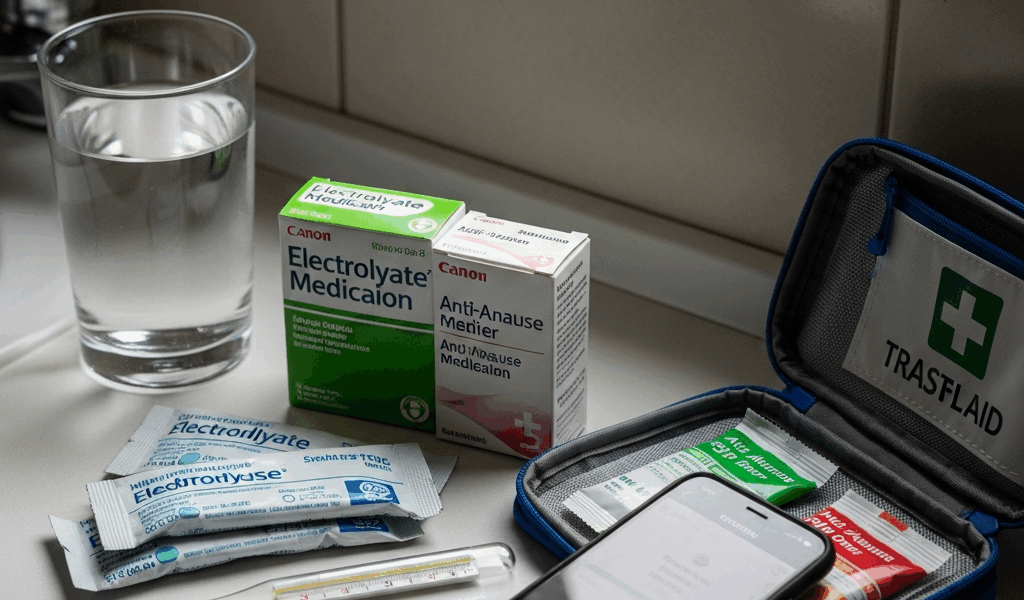
Now — sip fluids, but not plain water. This is where most people get it wrong. When you’re vomiting or dealing with severe diarrhea, plain water moves through your system too fast. It doesn’t actually rehydrate you. What you need are oral rehydration salts — ORS. These are electrolyte packets built specifically for this exact situation. Brands change depending on where you are. Southeast Asia has Pedialyte sachets fairly widely. Latin America stocks “Suero Oral” or packets marked “SRO.” European pharmacies carry Dioralyte or GastroLyte. Find whichever version is on the shelf near you.
One packet into however much water the label specifies — usually 500ml to 1 liter. Sip slowly. A tablespoon every few minutes. Not gulping. Sipping. Your stomach will throw back large volumes, so patience here actually shortens the whole ordeal.
Next: figure out what you’re actually dealing with. Standard food poisoning brings nausea, vomiting, diarrhea, stomach cramps, and sometimes a low-grade fever. Miserable, yes. Emergency? Usually no. Most cases slam you hard for 12–24 hours, then start backing off around hour 48.
Something more serious looks different — blood anywhere, fever at 102°F (39°C) or above, or nothing staying down for more than 4–6 hours. Those aren’t food poisoning symptoms you push through. Note that distinction now before you need it.
Grab a thermometer if you can. Front desks at most hotels keep them. Or pick one up at the pharmacy while you’re already there for ORS. Having a temperature baseline matters more than people realize when you’re trying to decide what comes next.
What To Buy at a Foreign Pharmacy
Probably should have opened with this section, honestly. Getting the right supplies fast is the difference between three days trapped in your room and being mostly functional by tomorrow afternoon.
Here’s the thing most travelers don’t know: you don’t need a prescription or a doctor’s note in most countries. Pharmacists across Europe, Asia, and Latin America can recommend treatment directly. Walk in, describe your symptoms clearly, and let them work.
First item — oral rehydration salts. Non-negotiable. Ask for “ORS,” “electrolyte replacement,” or “suero oral” depending on the country. A pack runs about $1–3 USD equivalent. Buy more than one.
Second: loperamide. Sold as Imodium or a generic version almost everywhere. But what is loperamide? In essence, it’s an anti-diarrheal medication that slows gut movement. But it’s much more than that — it’s also a medication you need to use carefully. Only take it if you have no fever and absolutely no blood in your stool. Diarrhea is actually your body pushing the infection out. If you’re dealing with bacteria, stopping that process can trap the problem inside and make everything significantly worse. No fever, no blood? Loperamide is safe and it works fast. Around $2–5 for a small pack. Tablets, not liquid.
Third: antacid or anti-nausea medication — omeprazole or famotidine can settle stomach acid. Some pharmacists will suggest ondansetron for severe nausea. It’s prescription-only in certain countries and over-the-counter in others. Ask what’s available.
Fourth: paracetamol or ibuprofen for fever or body aches. Fever typically breaks on its own within 24 hours, but having either on hand costs almost nothing.
Language barrier? Open Google Translate, switch to camera mode, and point it at the medication packaging. It reads and translates instantly. Or type your symptoms in English and show the pharmacist the screen. Keep it simple: “stomach pain, vomiting, diarrhea, started three hours ago.” Pharmacists worldwide have seen thousands of tourists in exactly your situation. They already know what you need before you finish the sentence.
Total spend: $10–20 USD for everything. Buy it now. Don’t wait until 2 a.m. when you’re worse and the shutters are down.
Warning Signs That Mean Go to a Hospital Now
Most food poisoning is uncomfortable and passes. Some of it doesn’t. Don’t guess on these — that’s what makes this list worth memorizing.
- Blood in your stool or vomit
- Fever over 102°F (39°C)
- Signs of severe dehydration: extreme dizziness, rapid heartbeat, dry mouth that won’t improve despite drinking fluids, no urination for 8+ hours
- Symptoms not improving after 48 hours
- Severe abdominal pain that doesn’t ease with rest
- You’re traveling somewhere with known cholera, typhoid, or other serious foodborne illness outbreaks
If any of those apply — hospital. Not “maybe later.” Now. Call your hotel, tell them what’s happening, and ask them to arrange transport. Most hotels have direct relationships with nearby hospitals and can cut through the confusion fast.
Remote area with no immediate access? Call your travel insurance provider’s emergency line right now. Have your policy number ready before you dial. They exist precisely for this situation and can coordinate care from wherever you are.
There’s a real line between “sick and managing it” and “this needs medical care.” Don’t tough out warning signs and pretend that line doesn’t exist.
How To Rest and Recover Without Losing Your Trip
Assume 24–48 hours of significant discomfort. Rest today, mostly functional tomorrow, back to normal by day three — that’s the honest timeline for most people.
Call your hotel now. Ask about late checkout if you’ve got somewhere else booked tomorrow. Most properties will accommodate a sick guest with reasonable notice. If you’re on a tour, contact the operator and ask about missing the next day’s activities. They handle this more often than you’d think.
Sleep as much as you can. Your body heals fastest when you’re not moving around. The trip will still be there in two days — I promise the ruins aren’t going anywhere.
Once nausea starts backing off and you’ve kept fluids down for a couple of hours, introduce bland food carefully. The BRAT diet — bananas, rice, applesauce, toast — is genuinely useful here. Easy to digest, gentle on a stomach that’s been through it. Start small: a few crackers, half a banana. Wait two hours. Still down? A bit more at the next meal.
Dairy, spice, fiber, fat — all of it stays off the table until you’re fully recovered. No ice cream, no hot peppers, no salads, no fried anything. Boring food now means normal food tomorrow. That’s a trade worth making.
Saw a doctor? Document everything. Receipt, diagnosis, medication prescribed. Photograph all of it. Travel insurance often reimburses medical costs — but only if you have the paperwork.
Getting Back on Your Feet the Next Day
Day two or three, you’ll feel noticeably better. Most food poisoning clears completely within 48 hours. Some lingering softness or mild nausea might hang around a few extra days — that’s normal. The acute phase passes.
Ease back into real food. BRAT foods holding steady? Add plain chicken, broth, soft vegetables. By day three, light normal meals are usually fine. Listen to your stomach more than any schedule.
Resume activities gradually. A short walk around the block on day two is plenty. Full tourism — the long museum visits, the walking tours, the boat trips — can wait until day three when you’re confident your stomach isn’t going to ambush you mid-excursion.
Travel moves again when you’re ready. Delayed buses, flights, train rides — all fine once you’re stable. Go enjoy what you actually came for.
I’m apparently someone who gets food poisoning in four different countries before learning the same lessons, and keeping ORS packets in my bag at all times works for me while improvising with sports drinks never quite does. Don’t make my mistake. Pack them before you leave, not after you need them.
One last thing: wash your hands before eating, choose hot food over room-temperature buffets, and skip adventurous street food when your stomach’s already uncertain. Not a lecture — just what actually works. This happens to experienced travelers. Panic makes it worse, managing it makes it shorter. Food poisoning is miserable and temporary. You’ll recover, your trip continues, and honestly — you’ll have a story. That’s all this is.


Leave a Reply