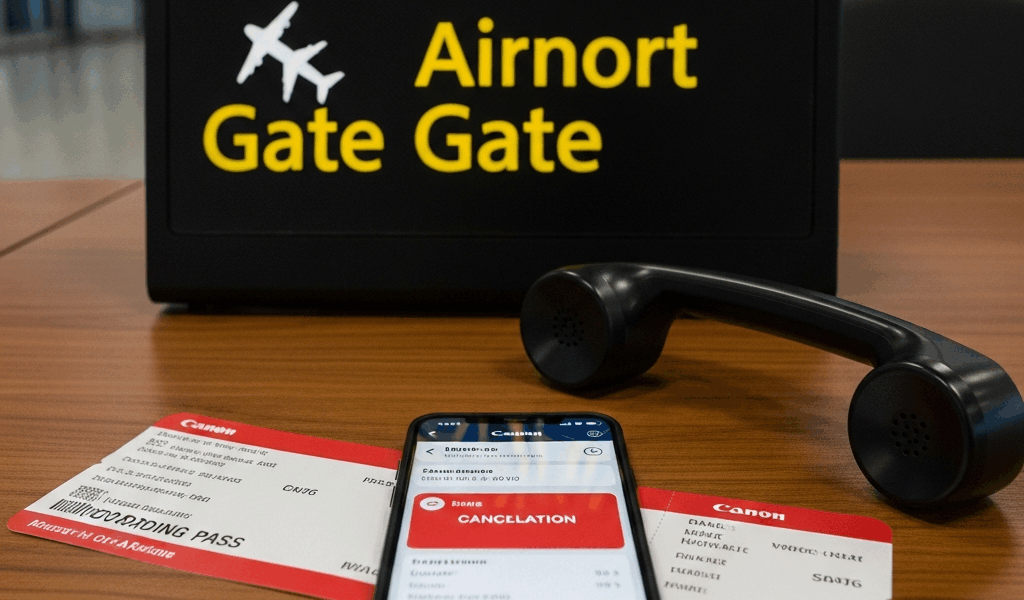
Flight Cancellations Have Gotten Complicated With All the Bad Advice Flying Around
Your gate agent just made the announcement. The flight is cancelled. And now 180 people around you are doing exactly the wrong thing — shuffling toward a queue like they’re waiting for a theme park ride. I know because I was one of them. Boston to Denver, January, peak ski season. American Airlines. That was 2023.
Today, I’ll share everything I learned — the hard way — about what actually matters when your flight goes down. Spoiler: it’s not reading EU261 regulations while standing in a terminal at 6 PM.
The First 10 Minutes Are the Whole Game
Probably should have opened with this section, honestly. The first 30 minutes after a cancellation determine whether you’re home tonight or spending three nights in an airport Marriott. Most people don’t know that. I didn’t.
Forget the queue — at least as your only move. Standing in line like everyone else means you’ve already lost. The 20 available seats across partner carriers disappear fast. You’re either in the first 20 passengers to rebook or you’re not. Simple math. Brutal math.
So, without further ado, here’s what you actually do — and you do all three at once:
- Open the airline’s app immediately. Refresh it. The rebooking system syncs to mobile faster than to gate agents’ desktop terminals — meaning you’ll see available seats before the person at the counter does. Real seats. Real times. Right now.
- Call the airline’s reservation line — not customer service. International numbers often answer faster than domestic ones. My call to American’s London number connected in 90 seconds flat. I’m apparently a person who owns a VPN and uses it for this exact situation, and it worked for me while the domestic line never picked up in under 45 minutes. Don’t make my mistake of calling the wrong number first.
- Get in the gate agent line anyway. You’re not waiting instead of doing the other two things — you’re gathering intel while they work in the background. The gate agent has manual flexibility the app won’t show you.
Do these one at a time? You’ve lost 30 minutes minimum. Do them together? You’ve got three rebooking options within 15 minutes and you take whichever one lands first. One channel fails — two others are running. One succeeds — you’re booked before most passengers realized the flight was even cancelled.
How to Ask for What’s Actually Available
Most passengers accept the first thing offered and feel relieved. That’s a mistake.
When you reach an agent — phone or gate — use this exact phrase: “What’s the next available seat on any carrier to my destination?”
That word “any” is the whole thing. Gate agents have access to partner airline inventory that passengers can’t see on their own — United, JetBlue, Southwest, whoever your airline has interline agreements with. They won’t volunteer this information. You have to ask directly. I found out about seven open seats on a United flight leaving four hours later only because someone behind me in line mentioned it. The gate agent could have booked me the whole time and never said a word.
After you ask about carriers, give them your flexibility — and be specific:
- Tell them one stop is fine. Accepting a connection doubles your available options immediately. Nonstop is great, but getting home beats waiting for perfect.
- Mention nearby airports. Can’t reach Denver tonight? Colorado Springs is 90 minutes south. Salt Lake City is three hours north. Most passengers never ask. The airline knows these alternatives exist.
- Tell them time matters less than getting there. An 11 PM arrival beats a 3 PM flight three days from now. You’re sleeping somewhere either way — might as well be your own bed.
The agent has discretion you aren’t seeing. Waitlisting you on multiple flights simultaneously. Flagging you for the next available seat on a full flight. Routing you through a connecting city that gets you there faster. None of this happens unless you ask for it specifically.
Vouchers and Hotels — What You’re Actually Owed
But what is a “controllable cancellation”? In essence, it’s one the airline caused — crew issues, maintenance problems, scheduling failures. But it’s much more than a label. It determines what you’re entitled to get.
The airline won’t volunteer any of this. Not meal vouchers. Not hotel accommodation. Not a $10 drink credit. You ask or you don’t get it. So ask — and ask each item separately:
- Meal voucher — usually $15–$20, sometimes higher depending on the agent
- Hotel accommodation if you’re stuck overnight
- Ground transportation voucher for next-day rebookings
- Phone call credit — some airlines still offer $5–$10 for this
Don’t ask “what am I entitled to?” — that framing invites a minimal answer. Say “Can I get a meal voucher?” Then stop. Wait. Then ask about the hotel. Then transport. Each individual ask lands differently than one bundled question. That’s what makes the separate-ask approach endearing to frequent travelers who’ve actually been through this.
Uncontrollable cancellations — weather, air traffic control, security — typically don’t come with vouchers, though plenty of airlines provide them anyway if you ask. EU261 is worth knowing exists for European routes, but that’s a months-long process. Not relevant to the problem you have in the next 45 minutes.
If You’re Stuck Overnight — Read Before You Book
The airline hands you a hotel voucher. Great. Read the actual fine print before you get excited. Most vouchers only cover participating properties — typically the cheapest options near the airport. A $200 voucher usually lands you at a mid-tier chain, not somewhere you’d choose on your own.
You have two real options here:
Check your credit card terms first — at least if you carry a premium travel card. American Express Platinum, Chase Sapphire Reserve, and a handful of others cover involuntary overnight stays after cancellations. If yours does, book the hotel you actually want, let the card handle reimbursement, and let the voucher expire unused. You sleep somewhere decent. Worth the 90-second check.
If you don’t have that coverage, use the voucher. No reimbursement waiting period. No paperwork. You need sleep now more than you need a nicer room — and that’s a real trade-off worth making.
The Cascade Problem — What Else This Kills
Frustrated by a cancelled leg, most travelers forget the downstream damage until it’s too late. The missed connection. The prepaid hotel sitting empty at your destination. The tour starting tomorrow at 8 AM. The rental car pickup that expired at 6 PM. A cancelled flight doesn’t just cancel a flight.
Some of this is recoverable — but only if you act fast:
- Connecting flights your airline booked: Their responsibility. Fight for it.
- Prepaid hotels and tours you booked separately: Travel insurance covers these. The airline doesn’t. Check your policy immediately — most have 24-hour claim windows.
- Rental cars: Call immediately and explain the situation. Most companies waive fees without argument. Miss that call? Fees stick.
One more thing — don’t leave the airport until you’re rebooked if same-day options exist. Agents prioritize passengers who are physically present. Once you’re in an Uber heading toward a hotel, you’re behind everyone still standing at Gate B14. And before you accept any rebooking, ask: “Is there anything sooner?” There almost always is. The agent won’t say so unprompted. That’s the whole pattern here.
Speed beats everything. Right now, while your name is still fresh and the seats still exist.




Leave a Reply