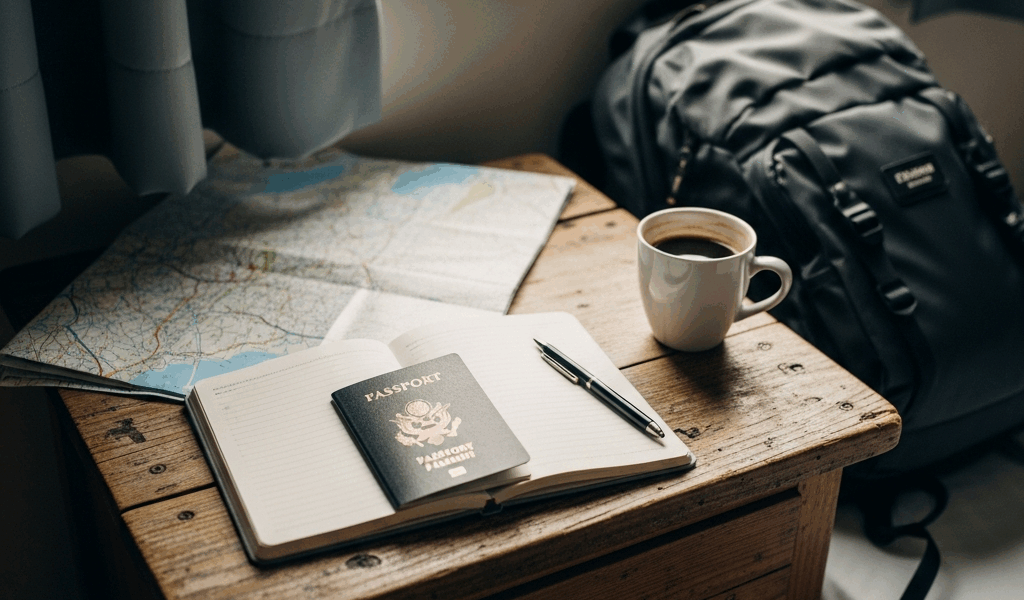
Why Solo Female Travel Feels Terrifying Before It Feels Like Freedom
Solo female travel has gotten complicated with all the conflicting advice flying around. Every forum thread spirals into worst-case scenarios. Every travel blog either catastrophizes the risks or waves them away entirely. Neither is useful when you’re sitting at your kitchen table, tabs open, trying to figure out if you should actually do this thing.
As someone who spent years researching solo trips before finally booking one, I learned everything there is to know about the gap between imagining a solo trip and actually taking one. Today, I will share it all with you.
Here’s the honest version: the fear is loudest before you go. Not on arrival day. Not on day three when you’ve figured out the metro and found a café you like. The anxiety peaks during the planning phase — at least in my experience — because everything is still abstract. You haven’t booked anything yet, so your brain fills the blanks with its worst material. You keep researching, keep thinking, keep waiting for the feeling of being ready.
Ready doesn’t show up before the trip. It shows up around day three, quietly, after nothing terrible has happened.
The anxiety is real. Don’t minimize it. But it’s not a stop sign. It’s just your brain doing threat detection on an unfamiliar situation. The goal isn’t to eliminate fear entirely — it’s to make decisions that reduce actual risk, which shrinks fear from “overwhelming” to “manageable” to “barely noticeable” somewhere between your first coffee out and your second solo dinner.
So, without further ado, let’s dive in. Practical decisions only. No hollow reassurances. No anxiety-inducing checklists dressed up as comfort.
How to Pick a First Destination That Works in Your Favor
The destination matters — not because some countries are objectively dangerous and others aren’t, but because the right first destination removes friction you don’t need when you’re still figuring things out.
But what is a “good first destination”? In essence, it’s somewhere with walkable neighborhoods, existing solo traveler infrastructure, and a culture that doesn’t treat a woman traveling alone as unusual. But it’s much more than that. It’s a place where the logistical load is light enough that you can actually enjoy yourself instead of white-knuckling through every interaction.
Portugal hits those marks. Lisbon specifically. Compact neighborhoods, walkable at night, guesthouses running €40–60 per night in Príncipe Real and Alfama. You can eat well for €8–12. The solo traveler community there is enormous — you will see other women traveling alone constantly. Portuguese locals speak enough English. The vibe is welcoming without being the aggressive, tourist-trap kind of welcoming.
Japan works if you like efficiency and structure. Tokyo feels overwhelming on arrival. That passes. The trains run exactly on time, signage covers major stations in English, and the streets are genuinely safe. Nothing is cheap — budget roughly ¥8,000–12,000 per night for a private room — but costs are predictable, which matters more than people admit.
Mexico City surprises people. Neighborhoods like Roma Norte and Condesa are full of solo travelers, young professionals, good coffee shops, and world-class tacos for under $3 USD. Yes, you stay aware of your surroundings. You do that anywhere. The culture is warm in a specific way that feels different from the watchfulness you might carry in a less familiar place.
Medellín, Colombia — honestly underrated. The city transformed dramatically over the past fifteen years. Weather is near-perfect year-round, the cost of living is low (rooms in Laureles running €15–25 per night), and people are genuinely friendly in a way that registers immediately.
That’s what makes these destinations endearing to us first-time solo travelers. Not a low crime index. Not a blog ranking system. It’s the combination of walkability, active solo traveler communities, and a local culture where you don’t stick out as a target just for existing alone.
Accommodation Choices That Make Solo Travel Safer and Easier
Hotels feel like the safe choice. You check in, lock the door, you’re alone. But here’s what nobody tells you: isolation accelerates anxiety faster than a crowded hostel common room ever will. You eat dinner in the room. You have no one to ask about neighborhoods or coffee. You don’t meet a single other traveler for five days.
Probably should have opened with this section, honestly.
Private rooms in hostels solve most of this. Your own lockable space at night. Access to other travelers during the day. A kitchen. Someone at breakfast who can tell you which neighborhood to avoid after dark. The cost is nearly the same as a budget hotel — €30–50 depending on the city — and the experience is completely different. You can ignore the dorm scene entirely. Nobody forces you into social situations. You just have the option.
Female-only dorms exist if you want that layer. Quieter. Less party-focused. Full of women who are solo traveling for exactly the same reasons you are. I’ve stayed in them when I was nervous and skipped them when I felt fine. Both options work depending on where your head is that week.
Guesthouses and Airbnbs land somewhere in the middle. Privacy is real. So is the isolation. While you won’t need a hotel concierge, you will need a handful of baseline conditions — specifically, a central location. This matters more when you’re alone than it ever does in a group. You want to be able to walk to restaurants, cafes, and other people at 8pm without a plan. Quiet residential areas feel wrong when you’re solo. Not dangerous necessarily. Just wrong.
When reading reviews: skip the vague ones. A five-star review saying “amazing place!!” tells you absolutely nothing. A three-star review saying “room was clean but the host asked a lot of personal questions and showed up twice unannounced” tells you everything. Look specifically for reviews from solo female travelers — they flag things that matter to your experience and tend to get buried under group traveler reviews.
Red flags worth taking seriously: hosts who emphasize one-on-one interaction in the listing description. Dark or incomplete photos. Isolated locations with no visible street life. Any review mentioning intrusive behavior from staff or owners. Don’t make my mistake of booking a “charming, quiet retreat” that turned out to be a 25-minute walk from any restaurant and had a host who appeared at breakfast uninvited.
Location beats everything else. A mediocre room in a vibrant, busy neighborhood beats a beautiful room in a quiet area every single time when you’re traveling alone.
How to Handle Unwanted Attention Without Letting It Wreck the Trip
It happens. Not everywhere equally, not every day, but enough that pretending otherwise just leaves you unprepared. A man approaches you. He persists past “no.” He follows you a block. He makes a comment. It’s not your fault, it’s not fair, and it’s also real.
Body language matters more than you probably expect. Walk like you know where you’re going — even when you don’t. Headphones in, even with nothing playing (the visual signal does most of the work). I’m apparently the kind of person who wears a €3 wedding ring I bought at a Lisbon market specifically for solo trips, and it works for me while going without never did in certain cities. Dark sunglasses. No eye contact with street vendors actively sizing you up. None of this makes you boring or inauthentic. These are small friction-reducers, not identity changes.
When something does happen: a firm, flat “No, thank you” with no smile and no softening. Cultural politeness is not your job in this interaction. In some places, this reads as rude. Fine. You’re not managing his feelings. You’re ending the interaction.
The fake phone call works — just put your phone to your ear and start talking. The illusion of being connected to someone elsewhere breaks the dynamic almost every time. It sounds silly until the first time it works in three seconds flat.
Sometimes the move is simply leaving. Walk into a café. Return to your accommodation. Move to a busier street. Not because you did anything wrong — just because your gut flagged something and your gut is real data. Trust it. That’s what makes solo travel endearing to us as a concept: you have the complete freedom to act on your instincts without negotiating with anyone else.
Here’s what nobody really says out loud: handling one of these moments well — with clarity, firmness, your own safety prioritized — actually builds confidence that carries through the rest of the trip. You handled it. Nothing fell apart. You moved on. That realization changes how you move through every situation afterward.
The Mindset Shift That Makes Solo Travel Actually Feel Good
There’s a moment — usually day three or four — where something releases. You’ve navigated the transit system. Ordered food in a language you barely speak. Found a café you’ve returned to twice. Sat alone at dinner and discovered it wasn’t sad. Met another solo traveler and had a real conversation about something other than travel logistics.
Nothing terrible happened. So why are you still scared?
You’re not. Not really. Not anymore.
Frustrated by the pressure to see everything in one sprint, many solo travelers find that slow travel — staying five to seven days in a single city instead of sprinting through four countries — is what finally makes the experience feel sustainable. Long enough that it stops feeling like a highlight reel. Long enough that you recognize the barista. Long enough to build a tiny, impermanent routine.
This new approach to slower solo travel took off several years later among the solo travel community and eventually evolved into the style most experienced solo female travelers know and swear by today. It’s not laziness. It’s how you actually absorb a place.
Build a flexible plan, not a rigid one. Know what you want to see. Don’t schedule every hour. The best parts — the unplanned conversations, the neighborhood you stumbled into by accident, the extra two days you decide to stay — only happen if there’s room for them.
[X] might be the best option for your first trip, as solo travel requires enough mental bandwidth to stay present. That is because if you’re managing a packed itinerary, you’re not actually experiencing anything — you’re executing a plan.
The fear you feel right now is bigger than what you’ll feel on the ground. It’s always bigger beforehand. More planning doesn’t fix it. Booking something small and near and actually going — that’s what fixes it.
Pick a city you’ve wanted to see. Book five nights. A guesthouse with solid reviews in a walkable neighborhood. Get there. Be awkward and uncertain for a few days. Watch it shift. Come home knowing you can do it again, anywhere you want.
That’s it. That’s the whole secret.

Leave a Reply