Overlanding has gotten complicated with all the gear lists and build threads flying around. As someone who started overlanding in a bone-stock Subaru Outback with a cooler in the back and zero idea what I was doing, I learned everything there is to know about getting into this hobby without going broke or getting stranded. Today, I will share it all with you.
What Overlanding Actually Is (And Isn’t)
Let me clear something up right away because this confused me when I started. Overlanding is not rock crawling. It’s not mudding. It’s not monster truck stuff. Overlanding is self-reliant travel to remote destinations where the journey is the point, not the destination.
Think of it as road tripping’s rugged cousin. You’re driving through backcountry on unpaved roads, camping along the way, carrying your own supplies, and generally spending time in places that don’t have gas stations or cell service. The goal isn’t to conquer terrain — it’s to travel through it.
That’s what makes overlanding endearing to us travel lovers — it combines the freedom of road tripping with the self-sufficiency of backcountry camping, and you get to sleep in some of the most spectacular places on the planet.
You Don’t Need an Expensive Vehicle
Probably should have led with this section, honestly. The biggest misconception that keeps people from starting overlanding is thinking they need a $60,000 truck with $30,000 in modifications. You don’t.
My first overlanding vehicle was a 2009 Subaru Outback with 140,000 miles on it. Stock suspension, stock tires, stock everything. I drove it on BLM roads across Nevada, fire roads through the Sierras, and forest service roads in Oregon for two full years before upgrading. Was there stuff I couldn’t do? Absolutely. But 80% of the trails I wanted to run were totally accessible in that Outback.
Here’s the honest truth about vehicle requirements: any vehicle with decent ground clearance and all-wheel or four-wheel drive can handle the vast majority of maintained dirt roads and forest service roads. That’s where most overlanding happens. The hardcore rock crawling trails you see on Instagram represent maybe 5% of what people actually do.
Good starter vehicles that won’t destroy your savings:
- Toyota 4Runner (any year, really — these things are unkillable)
- Jeep Cherokee XJ (cheap, capable, and parts are everywhere)
- Subaru Outback or Forester (surprisingly capable on mild trails)
- Toyota Tacoma (the default overlanding truck for a reason)
- Nissan Xterra (underrated and cheap)
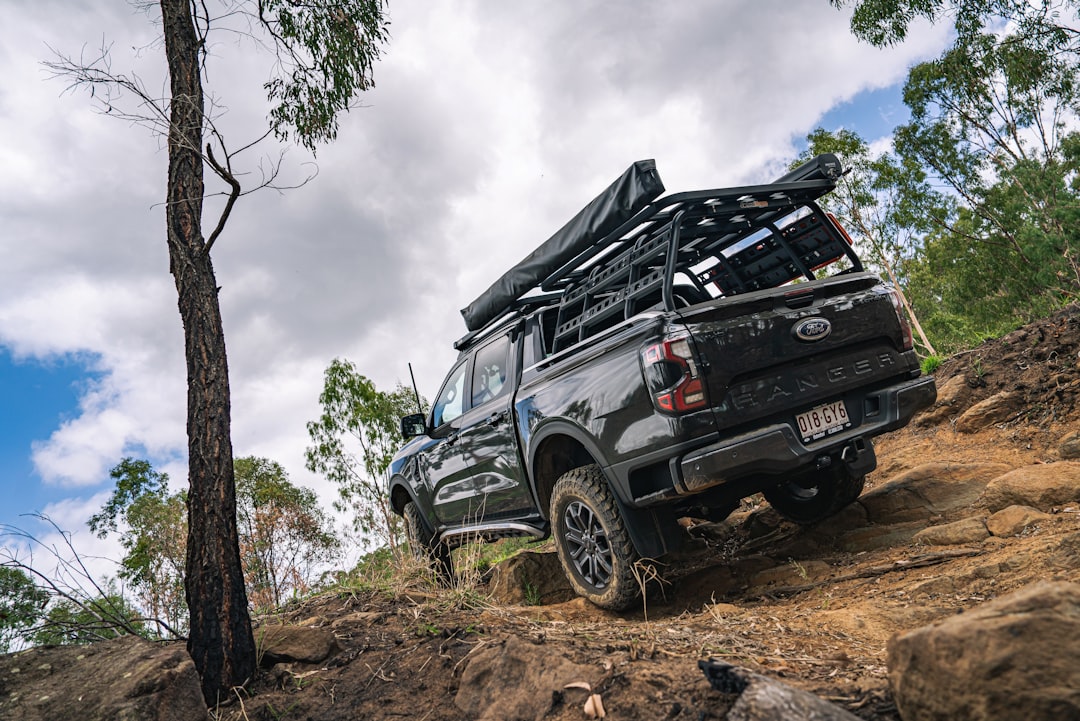
- Ford Ranger (older models are simple and easy to work on)
Whatever you drive, learn its limits before you push them. Take it on progressively harder trails and figure out where the traction breaks, where the clearance runs out, and what angles make you uncomfortable. Every vehicle has a threshold. Know yours.
The Gear You Actually Need (And What You Don’t)
If you follow overlanding forums and YouTube channels, you’ll quickly convince yourself you need a rooftop tent, a dual-battery system, a fridge, solar panels, a winch, recovery boards, a snorkel, auxiliary lighting, a water filtration system, and a satellite communicator before you can drive down a dirt road and sleep outside.
You don’t. Here’s what you actually need for your first trip:
Essential Gear
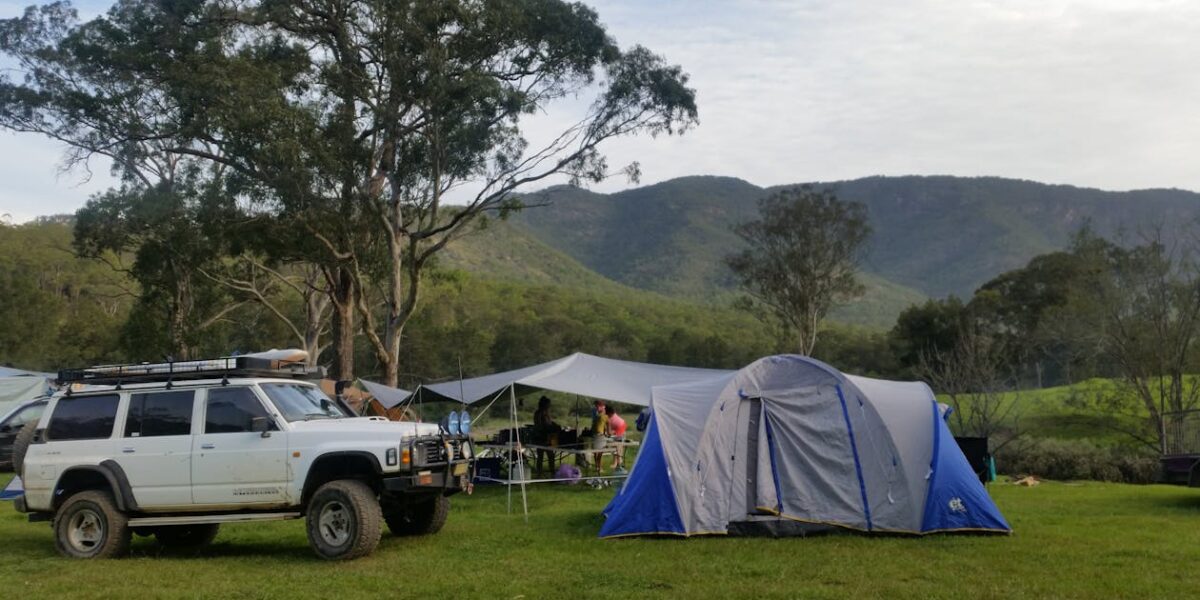
- A way to sleep: This can be a ground tent. A regular, normal tent. The $80 one from REI that you used for car camping works fine. You can upgrade to a rooftop tent later if you want, but it’s a luxury, not a necessity.
- A way to cook: A single-burner propane stove (like the classic Coleman) and a pot. That’s it. You can cook rice, boil water for coffee, heat up canned food. You don’t need a full camp kitchen with a griddle and a espresso maker. Not yet.
- A cooler: A regular cooler with ice. The fancy powered fridge-freezers are incredible, but they cost $800-1,200 and you can’t justify that until you know this is a hobby you’re committed to. I used a $35 Coleman cooler for my first two years.
- Water: At least two gallons per person per day. I carry collapsible water jugs that store flat when empty.
- A basic tool kit: Wrenches, screwdrivers, pliers, duct tape, zip ties. If something breaks on the trail, you need to be able to jury-rig a fix to get home.
- A first aid kit: A real one, not the tiny one from the dollar store. Bandages, antiseptic, pain relievers, any personal medications, and ideally a tourniquet if you’re going really remote.
- A way to air down and air up tires: Lower tire pressure dramatically improves traction on dirt and sand. A cheap tire deflator and a portable 12V air compressor (around $50-70) are essential.
Nice to Have but Not Essential
- Traction boards (MaxTrax or similar) — helpful in sand and mud but you can often dig yourself out with a shovel
- A tow strap — highly recommended if traveling solo
- CB radio or walkie-talkies — useful in groups
- A portable power station — convenient for charging devices
- Camp chairs and a table — comfort items that make a big difference in camp quality of life
Leave It at Home (For Now)
- Rooftop tent (buy after you know you like overlanding)
- Powered fridge (same reasoning)
- Solar panel system (overkill for weekend trips)
- Winch (unless you’re going seriously remote solo)
- Awning (nice luxury, not even close to necessary)
Planning Your First Trip
Your first overlanding trip should be boring. I mean that as a compliment. Pick a destination that’s close to home (within three hours), on well-maintained dirt roads, with cell service available at least part of the way. The goal isn’t adventure — it’s learning your systems.
On my first trip, I drove two hours from Sacramento to a dispersed camping spot off a forest service road in Tahoe National Forest. The road was graded gravel, the campsite was a flat clearing near a creek, and I was 25 minutes from the nearest town if anything went sideways. Nothing exciting happened. That was the point.
I learned how long it took to set up camp, how much water I actually used, what food worked and what didn’t, and where I’d packed things in the vehicle (spoiler: I couldn’t find anything and reorganized everything when I got home).
Where to Find Routes
- Gaia GPS: My primary navigation tool. The app shows public land boundaries, trail ratings, and user-submitted waypoints. The premium version is worth it.
- iOverlander: Community-sourced database of campsites, water sources, fuel, and border crossings. Particularly useful for international trips.
- Forest Service and BLM websites: Less sexy than an app, but they have detailed motor vehicle use maps (MVUMs) that show exactly which roads are legal to drive.
- Overlanding forums: Expedition Portal, Overland Bound, and various subreddits have trip reports with detailed route info. Reading someone else’s trip report before running the same route is the best preparation possible.
Rules of the Road (and the Trail)
There’s an etiquette to overlanding that you should know upfront:
Stay on established trails. Going off-trail damages the environment and can get you fined. It also gets trails closed for everyone when land managers see evidence of off-trail driving.
Pack it in, pack it out. Everything. Including human waste if you’re in an area without toilets. WAG bags are cheap and effective. Nobody wants to find toilet paper behind a bush at a campsite.
Yield to uphill traffic. If you’re descending and meet someone climbing, you pull over and let them pass. It’s easier for you to stop and restart going downhill than for them going uphill.
Don’t camp on top of other people. If you pull into a dispersed camping area and someone is already there, keep going. There’s always another spot. Give people their space.
Build fires responsibly. Check fire restrictions before your trip. In many western states, fire restrictions are in effect for half the year. Use existing fire rings. Keep fires small. Drown them dead before you sleep or leave. I’ve seen wildfire scars from campfires that weren’t properly extinguished — it’ll ruin a landscape for decades.
Common Beginner Mistakes
I made all of these, so learn from my stupidity:
Overpacking the vehicle. On my first trip, I brought enough gear for a two-week expedition on a two-night trip. The Outback was so loaded down it was scraping the rear bumper on dips. Bring what you need and nothing more. You can always add stuff on future trips.
Not checking tire pressure. I ran my first trail at full highway pressure and wondered why the ride was so rough and traction was terrible. Airing down to 20-25 PSI on dirt transforms the driving experience. Just remember to air back up before getting on pavement.
Driving too fast on dirt. Dirt roads are not highways. Washboard, unexpected ruts, loose gravel on blind corners — these things will catch you out if you’re pushing speed. My average speed on forest service roads is about 15-20 MPH, and I’m in no rush.
Not telling anyone where I was going. On my second trip, I went solo into the Nevada backcountry without telling anyone my route or expected return time. If I’d gotten stuck or hurt, nobody would’ve known where to look. Now I always leave a trip plan with someone and carry an inReach satellite communicator.
Forgetting a headlamp. Sounds stupid. It is stupid. Setting up camp in the dark while trying to hold a phone flashlight in your mouth is a character-building experience I don’t recommend.
Getting Started Doesn’t Have to Be Hard
Here’s my honest advice for anyone thinking about overlanding: stop researching and just go. Take whatever vehicle you have, throw a tent and a cooler in the back, drive down a dirt road to a place that looks nice, and camp for a night. That’s overlanding. Everything else — the vehicle builds, the gear upgrades, the epic multi-week expeditions — comes later.
I spent three months reading forums and watching YouTube before my first trip, and you know what I learned from all that research? About 10% of what I learned from actually going out and doing it. The trail teaches you what the internet can’t.
Start simple, start local, start now. The rest figures itself out along the way.


Leave a Reply